


Fibremaxxing is the name given on social media to the habit of eating more fibre. What interests me about it is how easily it fits into meals we already eat. If you like eggs on toast, try them on wholemeal bread with chickpeas warmed in cumin and lemon. There’s a good chance you’ll make it again for the chickpeas alone.
Why is fibre important?
Dietary fibre is the part of plant foods that our bodies cannot fully digest. Some types help bulk out and soften stools, making them easier to pass. Other types are used as food by bacteria in the large intestine. Those bacteria are part of our gut microbiome, the community of tiny organisms that live in the gut. When some of them break down fibre, they make substances that help nourish the cells lining the colon.
The benefits go beyond regular trips to the toilet. The World Cancer Research Fund says there is strong evidence that eating wholegrains and foods containing dietary fibre lowers the risk of bowel cancer. Higher-fibre diets are also linked with a lower risk of heart disease and type 2 diabetes. Some types of fibre, including those in oats and barley, can help lower cholesterol. That is one reason I like the idea of getting fibre from several foods over the course of a day. A bowl of oats, a spoonful of lentils and a handful of berries bring different kinds of fibre to the table. British Nutrition Foundation: Fibre
There’s also a possible connection with mental wellbeing. Researchers are looking at how gut bacteria may influence the signals that pass between the gut and the brain. A review in Nutrition Reviews found that people who ate more fibre tended to report slightly fewer symptoms of depression and anxiety. In trials, adding a fibre supplement did not clearly improve those symptoms. Researchers are still working out what role the gut microbiome plays in the link. Review of fibre intake, depression and anxiety
How much fibre do we need per day?
The World Health Organization recommends that adults get at least 25 g of naturally occurring dietary fibre per day from foods. In the UK, the NHS advises adults to aim for 30 g a day as part of a balanced diet. Wholegrains, vegetables, fruit and pulses such as beans, chickpeas and lentils are good places to start.
A strict carnivore diet is promoted in some wellness circles and excludes the plant foods that provide dietary fibre. Plain meat, fish and eggs can provide protein, but they provide no dietary fibre. If you enjoy those foods, think about what goes beside them. Roast chicken goes just as well with chickpeas and a generous helping of vegetables as it does with the sides you usually serve.
How to eat more fibre at breakfast, lunch and dinner
The amounts below are estimates. Pulse weights are for cooked or tinned and drained portions. Bread and tinned pulses can vary by brand, so use the label if you want a more precise figure.
Breakfast option 1: Eggs and cumin chickpeas on wholemeal toast
Warm 80 g of drained chickpeas with a little olive oil, cumin and lemon, then crush them lightly with a fork. Pile them onto one 40 g slice of wholemeal multigrain bread and serve with an egg. The chickpeas provide about 4.2 g of fibre and the bread about 2.9 g, for roughly 7 g of fibre. When choosing bread, look for wholemeal flour in the ingredients and check the fibre on the label. A loaf can contain several grains and still be made mainly with refined flour.
Breakfast option 2: Greek yoghurt or skyr with blueberries, seeds and almonds
Spoon plain Greek yoghurt or skyr into a bowl and add 100 g of blueberries, 15 g of finely chopped or ground skin-on almonds, and one tablespoon of milled chia or ground flaxseed. With ground flaxseed, the bowl provides about 6 g of fibre. With chia, it provides about 8 g, assuming the tablespoon weighs around 12 g. A tablespoon of ground flaxseed weighs about 7 g. Milled seeds can pack differently, so check the packet or weigh your spoonful if you want a closer estimate. Mayo Clinic’s guide to flaxseed and dietary fibre food tables
My bonus tip: I chop five dried prunes into my yoghurt. If your five prunes weigh 40 g, they add about 3 g of fibre. That brings the bowl to about 9 g with flaxseed or 11 g with chia. Food composition data for dried prunes
Lunch option 1: A warm lentil and broccoli bowl
Toss 120 g of cooked lentils, 80 g of broccoli and 40 g of carrots with lemon juice, olive oil, black pepper and chopped parsley. Serve with grilled chicken or a boiled egg if you like. The lentils, broccoli and carrots give the bowl roughly 11 g of fibre. Kale is another good option. Slice it finely so that it softens quickly, or stir it through a lentil soup near the end of cooking.
Lunch option 2: Cold quinoa salad with egg and avocado
I often prefer a cold lunch, and this salad is easy to put together if the quinoa and egg are already cooked. Toss 150 g of cooked, chilled quinoa with 30 g of rocket (rucola) or finely chopped kale and 80 g of diced red and yellow peppers. Add 50 g of avocado and one boiled egg, then dress with a teaspoon of extra virgin olive oil, a squeeze of lemon and black pepper. If you use kale, rub a little of the dressing into the leaves first to soften them.
The salad provides about 10 g of fibre and 15 g of protein. The quinoa and avocado provide most of the fibre, while the egg and quinoa contribute most of the protein.
Dinner option 1: Roast chicken with chickpeas, broccoli, carrots and peppers
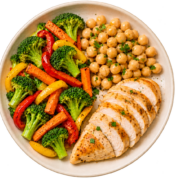
Serve sliced roast chicken with 120 g of drained chickpeas, 80 g of broccoli, 60 g of carrots and 60 g of red and yellow peppers. Roast the carrots and peppers with a little olive oil and smoked paprika, steam the broccoli, and toss the chickpeas with lemon juice and chopped parsley. Tinned chickpeas and frozen broccoli work well if that’s what you have on hand.
The chickpeas and vegetables provide about 10–11 g of fibre, with the chickpeas contributing just over 6 g. This is a simple way to eat the rainbow. Give about half the plate to the green broccoli, orange carrots and red and yellow peppers, then share the rest between the chickpeas and chicken. The plant-rich balance takes its cue from the EAT–Lancet Planetary Health Diet.
Dinner option 2: Cheesy lentil and broccoli bake
For one serving, mix 150 g of cooked green or brown lentils, 100 g of lightly steamed broccoli, 100 g of plain passata and 100 g of cottage cheese in a small ovenproof dish. Season with garlic, thyme and black pepper. Scatter over 25 g of grated cheddar and bake at 200°C (180°C fan) for about 20–25 minutes, until bubbling and golden. Choose cheddar made with vegetarian rennet and cottage cheese labelled suitable for vegetarians. If you are a fan of batch cooking like me, you can up the quantities and prepare more servings in one go.
The bake provides about 13 g of fibre and 34 g of protein. The lentils do most of the work for fibre, and the lentils and cheeses make it a substantial dinner. The exact amounts will vary with the products you use, especially the cottage cheese and lentils. British Nutrition Foundation fibre guide and USDA FoodData Central
If you choose the chickpea toast, warm lentil bowl and roast chicken dinner, those three meals give you about 28–29 g of fibre. A piece of fruit or a small handful of unsalted nuts can bring you to around 30 g. For example, 15 g of almonds gives you about 2 g of fibre. For more ideas on making fruit and vegetables a regular part of your meals, see 12 Compelling Reasons to Eat Fruits and Veg. The meal estimates draw on the British Nutrition Foundation’s fibre guide and USDA food composition data for peppers.
Can you add fibre to smoothies, drinks and yoghurt?
For a pear and oat smoothie, blend a ripe pear with the skin on, a spoonful of oats and some plain yoghurt. A little matcha goes well with pear, and maca gives an oat smoothie a mild, malty flavour. The fruit and oats provide most of the fibre. If you prefer to eat your breakfast with a spoon, chop the pear into a bowl of yoghurt and scatter the oats over the top. Read more about the benefits of smoothies and find more ingredient ideas in my free Smoothie Power e-book.
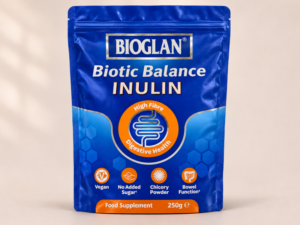
You can also stir inulin powder into a smoothie or yoghurt. If the packet lists 4.5 g of powder as a serving, check how much fibre that serving provides. Inulin can cause wind, so start with less if you’re trying it for the first time. British Dietetic Association guidance
Psyllium husk, the outer husk of the Plantago ovata seed, is a source of soluble fibre. On days when I think I’ve fallen short of my fibre target, I sometimes stir it into my collagen drink or protein shake. Check the label to see how much fibre your serving adds. I mix it in just before drinking because it thickens quickly. Use the amount of liquid specified on the packet and drink it straight away. Mayo Clinic’s guide to dietary fibre
Give yourself time to get used to more fibre
I would start with the meal that is easiest to change. Try the chickpeas on toast one morning or stir a few spoonfuls of lentils into a soup you already make. Add variety over the week with different vegetables, fruit, pulses, wholegrains, nuts and seeds. Herbs and spices add a little fibre in the quantities we normally use. Where they really earn their place is in making those foods delicious enough to come back to. Try cumin with chickpeas, dill with lentils or coriander and smoked paprika in a bean stew.
As you add more fibre to your meals, build up your intake gradually and remember to drink enough water throughout the day. If you take medication and want to use a fibre supplement to top up your intake, ask your doctor or pharmacist whether it’s suitable for you and whether you should take it at a different time from your medicines. British Nutrition Foundation’s guide to fibre · Mayo Clinic’s guidance on fibre supplements